
What to Wear Under a Wedding Dress: The Invisible Underwear Game Plan
May 14, 2026 · 7 min read · By LIVRA Team
Contents
Quick Answer
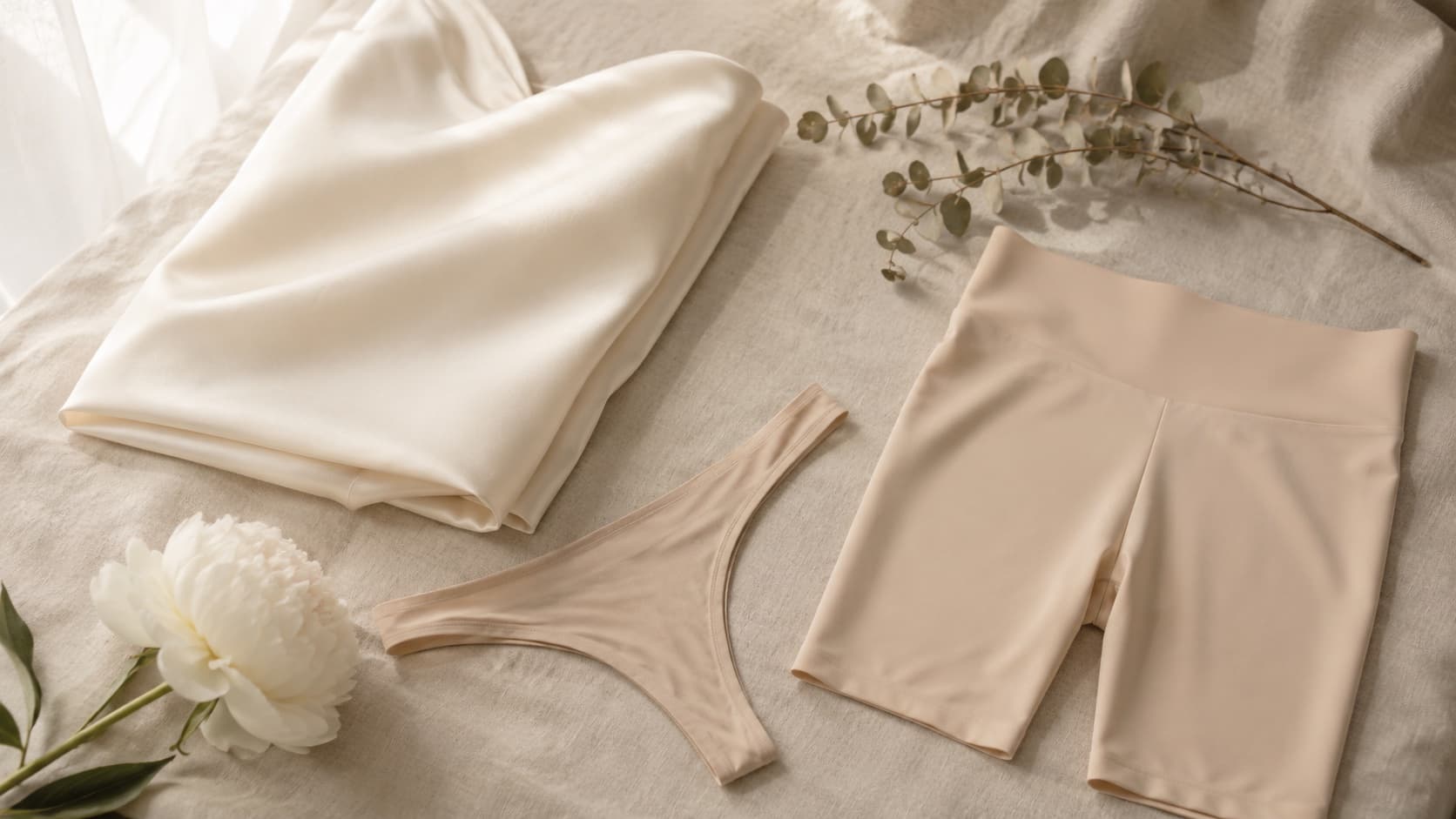
What you wear under a wedding dress depends on the gown's silhouette. Under fitted sheath, mermaid, or slip-satin gowns, wear a skin-tone seamless thong or a mid-thigh shaper short with laser-cut, no-elastic edges to kill visible lines. Under ballgowns and A-lines, lines don't show — so prioritize high-waist anti-chafe shorts for the long day. In every case: match your skin tone (not white), skip lace and elastic bands, and do a daylight photo test before the aisle.
The Real Problem: One Outfit, Twelve Hours, Forty Cameras
Your wedding dress is the most photographed, most scrutinized, longest-worn outfit of your life. It's also usually the most unforgiving. Satin shows every line. Crepe clings. A fitted bodice broadcasts any waistband ridge straight into the photos you'll keep forever.
And then there's the part nobody warns you about: you're not standing still in it. You're hugging two hundred people, walking on grass, sitting through dinner, and dancing until midnight. The underwear that looks invisible in the fitting room mirror can ride up, roll down, or chafe your inner thighs raw by the time the cake comes out.
So this isn't a "buy nude underwear" guide. It's a silhouette-by-silhouette game plan that solves three problems at once: smoothing, no visible panty line (VPL), and anti-chafe survival for a full event day.
First, Match Your Gown Silhouette
Before you think about smoothing or color, identify what your dress will reveal. The silhouette decides almost everything.
| Gown Silhouette | Main Risk | Best Layer | Why |
|---|---|---|---|
| Sheath / column | Visible lines | Mesh thong or mid-thigh shaper short | Clingy fabric prints every edge — go thinnest or smooth-and-cover |
| Mermaid / fit-and-flare | Lines + thigh chafe | Mid-thigh shaper short | Smooths the fitted top and covers the thigh where seams print |
| Slip / satin / crepe | Rear + waistband lines | Skin-tone mesh thong | Satin shows contrast and edges; tone-match thong disappears |
| Ballgown / A-line | Inner-thigh chafe | High-waist anti-chafe safety shorts | Skirt hides lines, so prioritize chafe and comfort |
The logic underneath the table: the more your dress hugs your body, the more you optimize for invisibility. The more it flares away, the more you optimize for comfort.
Rule 1: Match Your Skin Tone, Not the Dress
The instinct is to wear white under white. It's the single most common bridal mistake.
White underwear against your skin creates contrast. Even under an ivory gown, that contrast reads as a lighter, brighter patch — and camera flash makes it worse, because flash exposes tonal differences your eye glides over. Underwear in your actual skin shade has nothing for the eye (or lens) to catch. The gown reads as one continuous tone from waist to hem.
Look at the inside of your forearm in daylight — that's your reference. If you're between two shades, choose the slightly darker one. Slightly darker blends; slightly lighter glows through satin.
Rule 2: Laser-Cut or Bonded Edges — Never Elastic
The hardest line to hide isn't the seam down the middle. It's the edge: the elastic band at the waist and the leg openings.
Elastic is denser than the fabric around it. Under satin or crepe, that density difference prints through as a faint ring at your hip and a line across each thigh. The fix is construction, not color:
- Laser-cut edges are heat-sealed and paper-thin. Held to the light, the edge looks thinner than the body of the fabric — that thinness is what makes it vanish.
- Bonded waistbands are glued flat instead of sewn with elastic, so there's no raised band to ridge through.
When you shop, hold the piece up to a window. If the edges are thicker than the fabric, they'll print. Put it back.
Rule 3: Pick Your Layer by Fabric Thinness
Fabric Cheat Sheet
- Ice silk / fine mesh — the thinnest, coolest option. Drapes like a second skin and won't add bulk under a fitted bodice. Best for clingy satin and crepe where every millimeter shows.
- Microfiber seamless — slightly more opaque, a touch more smoothing. Good when you want light shaping without compression.
- Cotton — breathable but thicker, and it holds its shape away from your body, creating an outline. Save it for the getaway outfit, not the gown.
The trade-off is simple: ice silk and mesh win on invisibility and heat; microfiber wins on light smoothing. Choose based on whether your gown is testing your lines or your nerves.
Rule 4: Kill the Leg-Opening Line with Mid-Thigh Coverage
A brief's leg openings sit right where a fitted skirt is tightest across your thigh — the worst possible place for an edge. The clean fix under a sheath or mermaid is mid-thigh coverage: the hem ends well past where the gown clings, so there's no edge to print exactly where the camera is looking.
This is why a mid-thigh shaper short often beats a brief under fitted gowns. You get light tummy and hip smoothing and you move the only visible edge down to a spot the dress doesn't grip. Just confirm the hem is no-cuff / no-roll, or the hem itself becomes the line you were trying to avoid.
Rule 5: Match the Rise to the Bodice
A corseted or boned bodice usually extends past your natural waist. If your underwear waistband lands in the middle of the boning, you get a visible ridge through the structured panel.
- Boned / structured bodice → low-rise thong or a high-waist short that sits above the boning, never under the middle of it.
- Natural-waist or empire → mid-rise seamless or whatever matches where the dress sits.
The waistband should lie flat against skin — no roll, no dig, no top edge you can feel through the fabric.
Rule 6: Plan for the Long Day (Anti-Chafe Is Non-Negotiable)
Here's the part that ruins more wedding nights than VPL ever did: inner-thigh chafe. Twelve hours of walking and dancing, often in warm weather, with no thigh protection under a flowy skirt — by the reception, bare thighs are raw.
Under a ballgown or A-line, lines are a non-issue because the skirt stands away from your body. So flip your priorities: pick a high-waist anti-chafe short in a breathable, smooth fabric. Mid-thigh coverage stops skin-on-skin friction, and if your skirt lifts on the dance floor, a tone-match finish keeps it invisible anyway.
Under fitted gowns, a mid-thigh shaper short pulls double duty: it smooths and it covers the thigh, so it handles chafe too.
Common Mistakes
- Wearing white "because it's a wedding." White contrasts with your skin and shows under ivory satin. Match your skin tone instead.
- Lace anywhere under the gown. Lace prints through satin like a stamp — you'll see a textured border where it ends. Save it for the honeymoon.
- Elastic waistbands and leg openings. The number-one printed line. Choose laser-cut or bonded edges only.
- A brief under a fitted skirt. The leg openings land exactly where the gown clings. Go thong (no rear line) or mid-thigh short (edge moved down).
- Forgetting chafe under the ballgown. No lines doesn't mean no problems. Twelve hours of dancing without thigh coverage ends in pain.
- Heavy shapewear you've never tested. Squeezing into firm compression for the first time on the day is a recipe for discomfort and a visible top edge. Light, breathable smoothing beats crushing control.
- Skipping the photo test. The fitting-room mirror lies. Flash photography reveals contrast your eye misses.
The Daylight + Flash Test
Two weeks out, do a full dress rehearsal in your chosen layers:
- Stand in bright daylight and turn 360 degrees in a full-length mirror.
- Sit down and stand up. Watch for a waistband ridge or roll.
- Bend and reach as if hugging a guest — the fabric stretches and thins right here.
- Have someone take a flash photo from behind and from the side. Flash exposes lines and color contrast the eye glides past.
If anything shows in any of those four checks, change the underwear — not the dress.
The Bottom Line
The formula is one line: the more your gown hugs you, the more you chase invisibility; the more it flares, the more you chase comfort.
For fitted sheath, mermaid, and slip-satin gowns, go skin-tone with laser-cut or bonded edges — a thong for the cleanest rear line, or a mid-thigh shaper short for light smoothing plus a thigh-line that disappears. For ballgowns and A-lines, forget the lines and protect your thighs with high-waist anti-chafe shorts.
Match your skin, skip the elastic and the lace, test it under flash before the aisle — and your underwear does exactly what it's supposed to on the biggest day: nothing at all.
For more on why edge construction makes the difference, read What Is Seamless Underwear. For the full color logic, see What Underwear to Wear Under White Pants.
Quick Comparison
| Gown Silhouette | Main Risk | Best Layer | Why |
|---|---|---|---|
| Sheath / column | Visible lines | Mesh thong or mid-thigh shaper short | Clingy fabric prints every edge — go thinnest or smooth-and-cover |
| Mermaid / fit-and-flare | Lines + thigh chafe | Mid-thigh shaper short | Smooths the fitted top and covers the thigh where seams print |
| Slip / satin / crepe | Rear + waistband lines | Skin-tone mesh thong | Satin shows contrast and edges; tone-match thong disappears |
| Ballgown / A-line | Inner-thigh chafe | High-waist anti-chafe safety shorts | Skirt hides lines, so prioritize chafe and comfort |
Frequently Asked Questions
What underwear do you wear under a fitted wedding dress?
Under a sheath, mermaid, or slip-satin gown, wear a skin-tone seamless thong with laser-cut or bonded edges to kill the rear line, or a mid-thigh seamless shaper short if you want light smoothing and a clean leg line. Avoid lace, elastic waistbands, and any color that isn't close to your skin tone — satin and crepe print every edge and contrast.
Should wedding underwear be white or skin-tone?
Skin-tone, almost always. White underwear contrasts with your skin and reads as a lighter patch under most gown fabrics, especially satin and anything slightly sheer. Match your underwear to your skin tone — pick the slightly darker shade if you're between two — so it blends instead of glowing through.
How do I stop inner-thigh chafing on my wedding day?
Wear high-waist anti-chafe safety shorts or mid-thigh seamless shorts under your gown. A full event day means hours of walking and dancing, and a flowy skirt offers no thigh protection. Mid-thigh coverage in a smooth, breathable fabric is the single best anti-chafe move — and under a full skirt it stays completely invisible.
Can I wear a thong under a satin slip dress?
Yes — a skin-tone seamless thong with bonded edges is usually the best choice under satin or crepe, because it removes the rear panty line entirely. The key is no elastic waistband and a color close to your skin. For extra smoothing on a fitted slip, a mid-thigh shaper short works too, as long as the hem is no-cuff so it won't print a ring.
Related Reading

What Underwear to Wear Under White Pants (Without the Panic)
The complete guide to picking underwear for white pants — why most women get it wrong, the one color rule that actually works, and the fabrics that stay invisible in daylight.
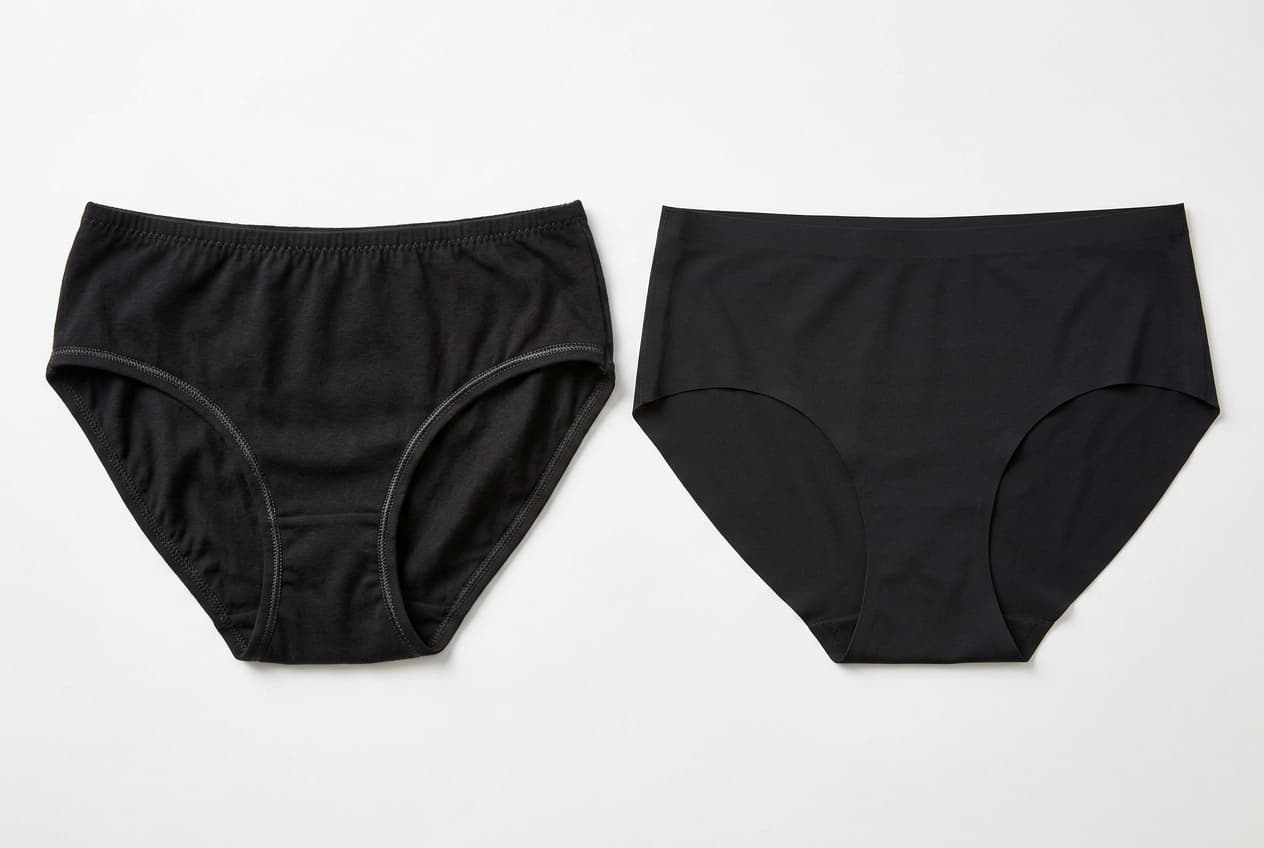
What Is Seamless Underwear? Everything You Need to Know
A complete guide to seamless underwear — how it's made, why it's different, who it's for, and how to choose the right pair for your body and wardrobe.
Best Underwear for Leggings: A No-Show, No-VPL Buying Guide
Eliminate visible panty lines under leggings for good. The complete guide to underwear styles, fabrics, and fits that stay truly invisible.