
How to Choose the Right Underwear Size: A Complete Sizing Guide
April 11, 2026 · 5 min read · By LIVRA Team
Contents
Quick Answer
Measure your hips at the widest point in inches — don't use your jeans size. Match the number to the brand's size chart. Between two sizes? Size up. Too-small digs in and creates visible lines; too-big shifts and rolls. The right fit: waistband lays flat without compression, and leg openings leave no marks after 8 hours of wear.
Why Underwear Sizing Matters More Than You Think
Wearing the wrong underwear size doesn't just feel bad — it can actually affect your health and confidence. Too tight, and you're dealing with restricted circulation, skin irritation, and visible pressure marks. Too loose, and you're fighting bunching, riding up, and a complete lack of support.
Yet most people have never actually measured themselves for underwear. They buy the same size they've always bought, even as their body changes.
How to Measure Yourself
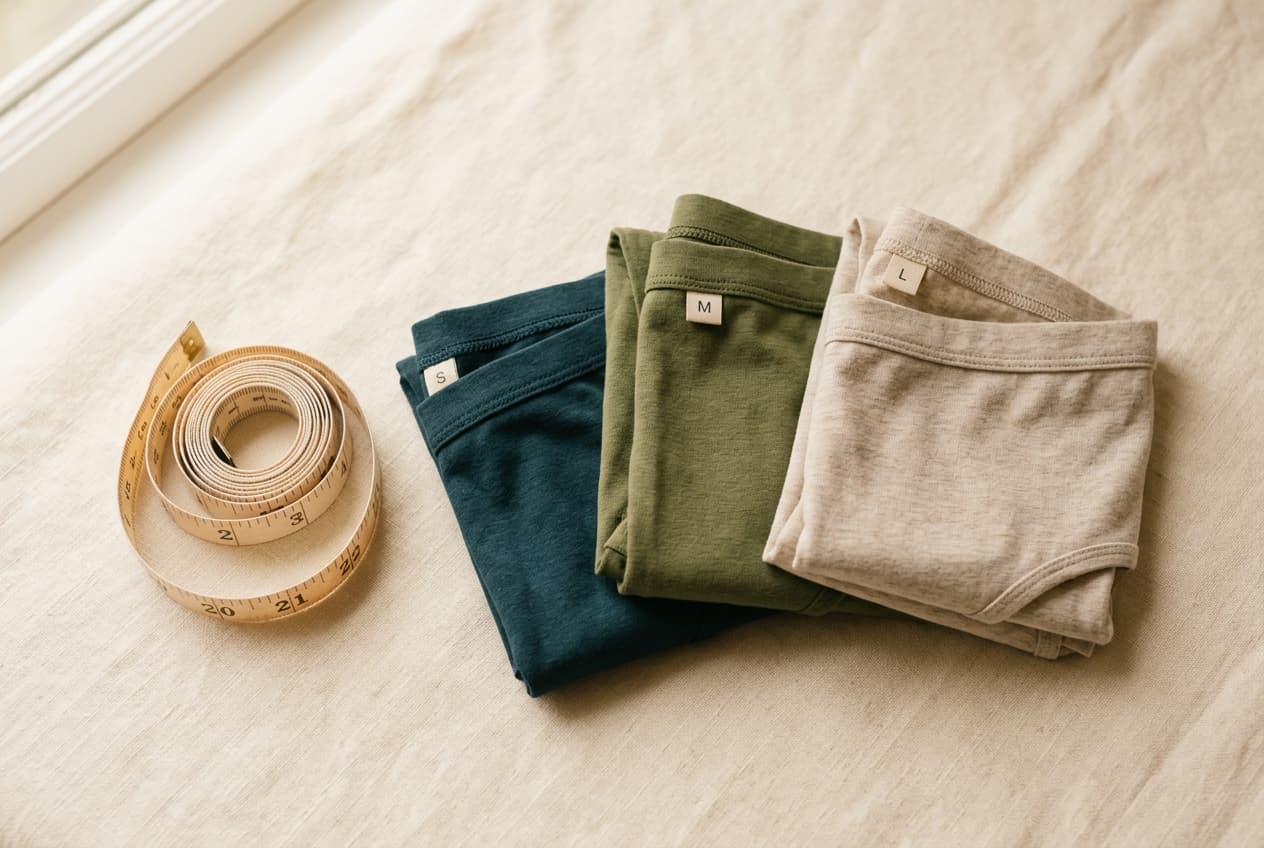
You only need two measurements and a flexible tape measure.
Waist Measurement
- Stand naturally — don't suck in your stomach
- Wrap the tape around your natural waist (the narrowest part of your torso, usually about 1 inch above your navel)
- Keep the tape snug but not tight — you should be able to slide one finger underneath
- Read the measurement in inches
Hip Measurement
- Stand with your feet together
- Wrap the tape around the fullest part of your hips and buttocks
- Keep the tape level all the way around
- Read the measurement in inches
Important: Your hip measurement typically determines your underwear size, not your waist measurement.
Women's Underwear Size Chart
| Size | Hip (inches) | Waist (inches) |
|---|---|---|
| XS | 33-34 | 23-24 |
| S | 35-36 | 25-26 |
| M | 37-38 | 27-28 |
| L | 39-40 | 29-30 |
| XL | 41-42 | 31-32 |
| XXL | 43-44 | 33-34 |
| XXXL | 45-46 | 35-36 |
Men's Underwear Size Chart
| Size | Waist (inches) | Hip (inches) |
|---|---|---|
| S | 28-30 | 35-37 |
| M | 31-33 | 38-40 |
| L | 34-36 | 41-43 |
| XL | 37-39 | 44-46 |
| XXL | 40-42 | 47-49 |
| XXXL | 43-45 | 50-52 |
What to Do When You're Between Sizes
This is where most people make a mistake. If you're between sizes, always size up — especially for these styles:
- Shaping/control underwear: Already compressive. Sizing down doubles the squeeze.
- High-waist styles: A too-small waistband rolls down constantly.
- Safety shorts: Too tight at the thigh = visible cutting line.
The only exception is very stretchy ice silk or microfiber — these fabrics have enough give that going with the smaller size often works.
Size Varies by Style
This catches people off guard: you might be a Medium in bikini briefs but need a Large in high-waisted shapers. Here's why:
Bikini / Hipster
The most forgiving style. Minimal fabric with stretchy construction means your standard size usually works.
High-Waist Brief
More fabric covering more area means more places where fit matters. The waistband needs to sit comfortably at your waist without rolling, and the leg openings need enough room at your hips.
Thong
Fit is critical here. Too loose and it won't stay in place. Too tight and it digs in. Stick to your exact measured size.
Safety Shorts
The thigh circumference becomes the critical measurement. If you have muscular or fuller thighs, size up to avoid the shorts cutting into your legs.
Shaping Underwear
These are designed to compress. Buy your true size — the shaping is built into the garment engineering, not from wearing a smaller size. Sizing down just makes it uncomfortable without improving the shaping effect.
Signs You're Wearing the Wrong Size
Too Small
- Red marks on your skin after removing
- Waistband rolls or folds over
- Fabric cuts into your thighs or hips
- Constant wedgies or riding up
- Visible muffin top above the waistband
Too Large
- Fabric bunches or wrinkles under clothing
- Underwear shifts around during movement
- Waistband slides down throughout the day
- Excess fabric visible through tight pants
Pro Tips for Perfect Fit
-
Re-measure every year — Body size fluctuates. Don't assume last year's size still fits.
-
Wash before judging — New underwear has factory sizing. After 1-2 washes, the fabric relaxes to its true fit.
-
Test with your tightest outfit — Put on the underwear, then your tightest pants or dress. Check for VPL in a mirror. If you see lines, try a size up or a different style.
-
Different brands = different sizing — A Medium at one brand might be a Large at another. Always check the specific size chart.
-
Consider your body shape, not just numbers — If you have a significant difference between waist and hip measurements (pear shape), prioritize the hip measurement for sizing.
The Bottom Line
Finding the right underwear size takes 2 minutes of measuring and a quick check of the size chart. That small investment saves you from years of discomfort, constant adjusting, and wasted money on underwear that doesn't fit. Measure, check the chart, and when in doubt, size up.
Quick Comparison
| Pick | Sizing Strategy | If Between Sizes | Body-Shape Fit | Comfort at Size Up |
|---|---|---|---|---|
| Lace-Trim Cooling Brief | True to size or up | Size up | All body shapes | Excellent — stretch forgives |
| Lifting Tummy Brief | Up for fuller hips | Size up | Pear / hourglass / curvier | Excellent — waist still snug |
Frequently Asked Questions
Should I size up if I'm between underwear sizes?
Yes, almost always. Too-small underwear digs in and creates visible pressure lines; too-big shifts and rolls — but rolling is easier to live with than digging. Pick the larger size. Most people wear underwear one size too small.
Do underwear sizes differ by brand?
Yes, significantly. A size M at one brand can fit like a size S at another. Always measure your hips at the widest point and match to the brand's specific size chart — not your 'usual' size. Even within one brand, styles (thong vs brief) may vary.
How do I measure myself for underwear?
Measure your hips at the widest point (usually 7-9 inches below the waist) with a soft tape measure parallel to the floor. Stand with feet together, don't pull tight, and record the number. Match to the brand's size chart — not to your jeans size, which is unrelated.
Related Reading
How to Buy a Wireless Bra That Actually Fits (No Underwire Required)
Worried a wireless bra won't support you? Learn how to size and choose one that stays put — band tension, cup stretch, and sizing between bands, no wire needed.
Best Underwear for Fuller Hips: A Sizing & Fit Guide
Standard underwear digs into fuller hips and prints lines. Here's how to find pairs that fit curvier shapes — smoothing, stretch, and zero digging.
How to Stop Underwear from Riding Up: Causes and Solutions
Tired of constantly adjusting your underwear? Learn why underwear rides up and the proven fixes — from sizing to fabric to style changes.